

Blog
Avoiding Surgery: A Non-Surgical Path to Lasting Pain Relief in Glendale

Told You Need Surgery? Why Many Glendale Patients Explore a Non-Surgical Path First
Hearing the word "surgery" from a doctor tends to stop people in their tracks. Maybe you have been dealing with a stubborn shoulder, knee, hip, or tendon problem for months, imaging finally got done, and now a surgical repair is on the table. It is a reasonable recommendation in many cases, but it is also completely reasonable to want to understand your other options before committing to an operating room, anesthesia, and weeks of recovery. If that describes where you are right now, you are far from alone, and there is a structured way to think through the decision.
At Health Edge Sports & Spine in La Crescenta, Dr. Armen Manoucherian and the team regularly meet with Glendale area patients who have a surgical recommendation in hand and want a second opinion focused on conservative care. One tool they use to help the body heal on its own, without needles, incisions, or downtime, is SoftWave Tissue Regeneration Therapy (SoftWave TRT). This article walks through how that conversation typically goes, what SoftWave can and cannot do, and how to think clearly about the decision ahead of you.
Why Surgery Gets Recommended in the First Place
Surgical recommendations usually come from a specific finding: a torn rotator cuff, a meniscus tear, significant joint degeneration, a chronic tendon tear that has not responded to rest, or a structural problem that imaging shows clearly. In many cases, surgery is recommended because it is genuinely the most direct way to correct that structural issue, and there are situations where it is the right call, particularly with acute traumatic injuries, complete tears, or advanced joint damage.
What often gets less airtime in a short specialist visit is the range of conservative options that may be appropriate to try first, especially for chronic overuse injuries, partial tears, tendinopathy, and early to moderate joint degeneration. Surgery is not always an emergency decision, and for many gradually developing conditions, there is a reasonable window to explore whether the body can be supported in healing itself before more invasive steps are taken.
Where SoftWave Fits Into That Conversation
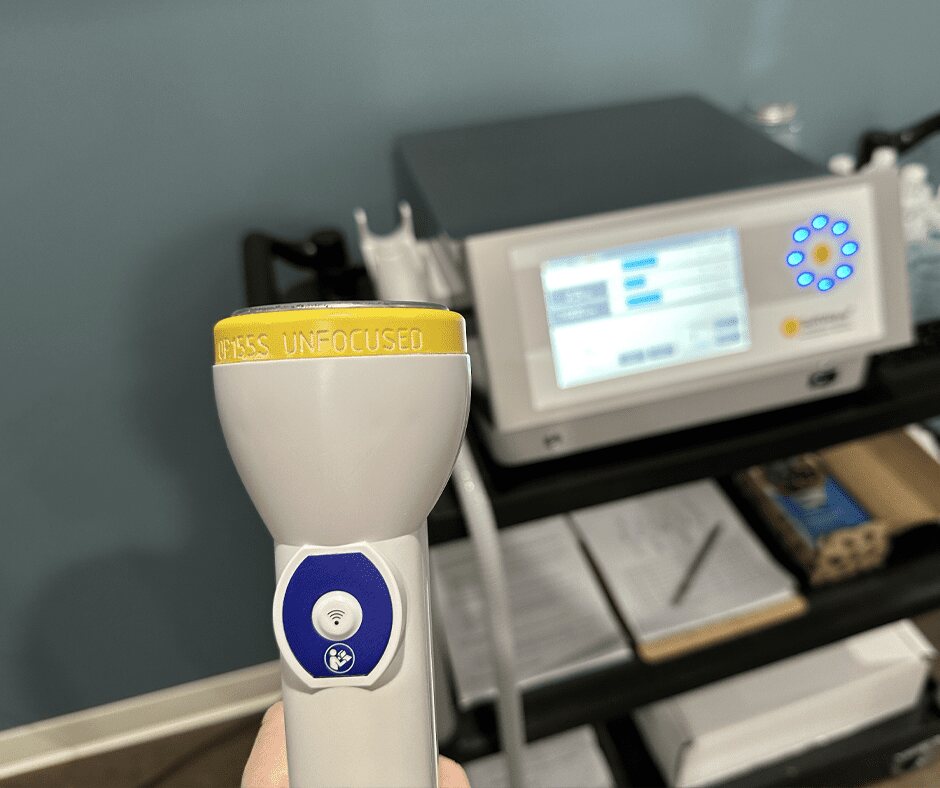
SoftWave TRT uses electrohydraulic, broad-focused acoustic waves, generated through a patented parabolic reflector, to reach deep into affected tissue. This sets it apart from radial, electromagnetic, or piezoelectric shockwave devices, which tend to treat more superficially or concentrate energy at a single point. SoftWave is built to engage a wider area of tissue at a depth that matters for chronic joint and soft-tissue conditions.
Rather than cutting, repairing, or replacing tissue directly, SoftWave is designed to stimulate the processes your body already uses to heal itself. For patients who are surgery-averse, or who simply want to know they explored every reasonable conservative avenue first, that distinction matters. Sessions run about 10 to 15 minutes, there are no needles or drugs involved, and most patients complete a series over roughly 6 to 8 weeks, with no anesthesia, no incision, and no scheduled downtime away from work or daily life.
How SoftWave Helps the Body Heal Instead of Repairing It Surgically
In plain language, here is what the therapy is designed to encourage inside the treated tissue:
- Resident stem cell activation: the acoustic waves are intended to stimulate the body's own local stem cells and encourage their migration to the site that needs repair.
- Angiogenesis: new blood vessel formation is promoted, which is meant to improve blood flow and deliver more oxygen and nutrients to the damaged area.
- Cell proliferation and collagen support: the therapy is designed to encourage the building blocks of stronger, healthier connective tissue over time.
- Inflammation modulation: rather than simply suppressing inflammation, SoftWave is designed to help regulate it as part of a normal, productive healing response.
SoftWave technology has been studied at leading academic and research institutions and is used by clinicians who also treat professional and collegiate athletes. The FDA has cleared SoftWave for specific uses, including activation of connective tissue, temporary increase of local blood flow, temporary relief of minor muscle and joint pain, treatment of chronic diabetic foot ulcers, and treatment of acute second-degree burns. To be direct: SoftWave is not a guaranteed alternative to surgery for every condition, and outcomes vary by patient, diagnosis, and severity.
What "Delaying or Avoiding Surgery" Realistically Looks Like
For some Glendale patients, a course of SoftWave therapy, sometimes combined with physical therapy or activity modification, is enough to reduce pain and improve function to the point that surgery is no longer necessary, or can reasonably be postponed while the body continues to heal in the weeks and months after treatment. For others, especially with more advanced structural damage, SoftWave may improve tissue health going into surgery, or simply confirm, after a genuine conservative attempt, that surgical repair is the best path forward.
Either outcome is valuable information. Trying a well designed conservative approach first is not about avoiding surgery at all costs, it is about making sure surgery is truly the necessary next step rather than the first thing tried.
If a surgical recommendation has you looking for a second opinion focused on conservative options, schedule a consultation to discuss whether SoftWave therapy is a reasonable option to try for your specific condition before moving forward with surgery.
Questions Worth Asking Before You Decide
If you are weighing surgery against a more conservative path, a few questions can help frame the decision. Is the underlying issue a complete structural failure, such as a full tendon tear or advanced joint damage, or a more gradual, chronic condition that has room for conservative treatment first? Has your case been reviewed by a provider who offers non-surgical options, not only by a surgeon whose training centers on operative solutions? What would a reasonable trial of conservative care look like, and how would you and your provider judge whether it is working?
None of this is meant to suggest surgery is over-recommended or something to fear. Some conditions genuinely require it, and delaying a truly needed operation can make the underlying problem harder to treat. The goal is simply full information: weighing a non-invasive option that supports your body's own healing capacity against a surgical path, with a provider who can honestly walk you through both.
A Balanced Way to Move Forward
Dr. Armen and the team at Health Edge Sports & Spine approach this the way any responsible provider should: with an honest evaluation of your imaging, history, and goals, not a one-size-fits-all pitch for either surgery or SoftWave. Some patients walk in with a surgical recommendation and leave with a conservative plan that resolves their pain over the following months. Others go through a course of SoftWave, see meaningful improvement, but still need surgery, and go into that procedure with a clearer picture of their tissue health. Both are legitimate outcomes of a genuine evaluation.
What is not in question is that surgery-averse Glendale patients deserve the chance to explore a well studied, non-invasive option first, particularly for chronic, non-emergency conditions where that window of time genuinely exists. SoftWave will not be the right fit for every diagnosis, and it is never a substitute for a qualified surgical opinion when surgery is truly indicated. But for many patients facing a recommendation for joint or soft-tissue surgery, it is a reasonable, evidence-informed step worth discussing before signing a consent form.
Ready to Take the Next Step?
If you have received a surgical recommendation and want to understand your non-surgical options first, an honest evaluation can help you decide with confidence either way.
Request your SoftWave Therapy new patient visit online today
Contact Health Edge Sports & Spine
Health Edge Sports & Spine
2600 Foothill Blvd, Suite 203
La Crescenta, CA 91214
Phone: (818) 724-4352
Our Main Office Website: https://healthedgela.com/
‹ Back