

Blog
How Many SoftWave Sessions Will You Need? A Realistic Treatment Timeline

How Many SoftWave Sessions Will You Need? A Realistic Treatment Timeline for Glendale Patients
It is one of the most common questions patients ask before starting care: "How many sessions until I feel better?" If you are dealing with nagging shoulder pain, stubborn plantar fasciitis, or a tendon injury that has lingered for months here in Glendale, you want a clear answer. The honest response is that no single number fits everyone, but there is a realistic pattern most patients can expect.
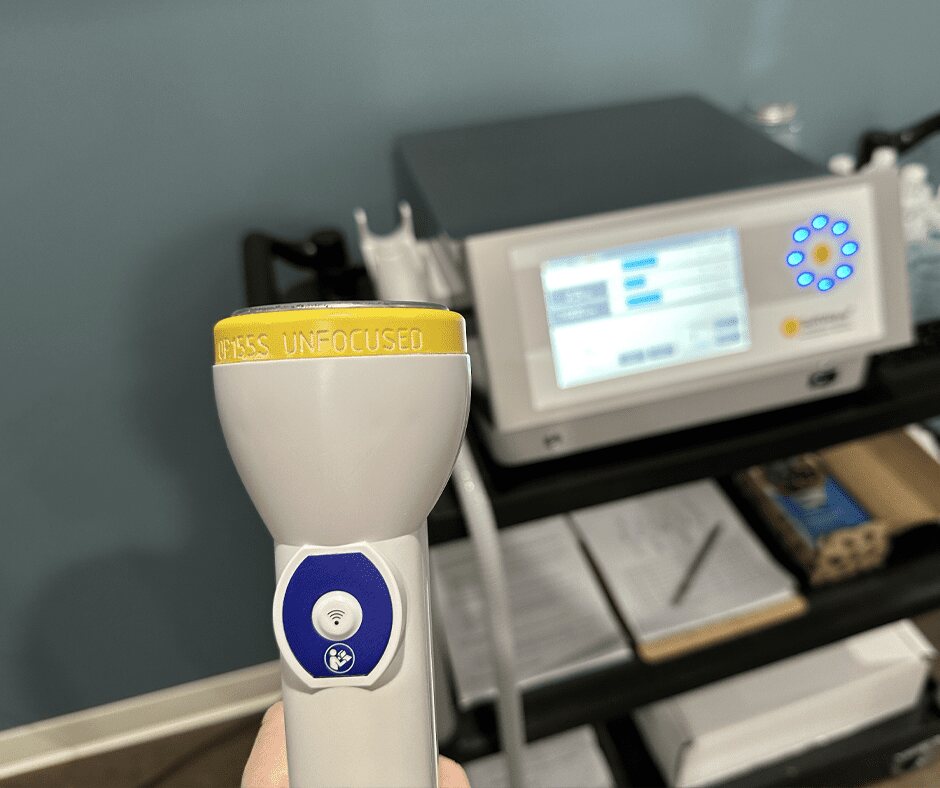
At Health Edge Sports & Spine, Dr. Armen Manoucherian and the team use SoftWave TRT, a non-invasive acoustic wave therapy, to help the body activate its own repair process. Unlike a prescription with a fixed dosage, SoftWave works with your biology, which does not move at the same pace for every person. This article covers what determines your session count, what a typical timeline looks like, and why healing does not stop the day your last appointment ends.
Why There Is No One Size Fits All Number
Several factors shape how many SoftWave sessions a given patient may need, the same variables any experienced clinician weighs when building a treatment plan for soft tissue or joint pain.
- The condition itself. A fresh case of muscle tightness responds differently than a tendon inflamed for a year. Conditions like plantar fasciitis or tennis elbow tend to follow a fairly predictable arc, while others need a longer runway.
- How chronic the issue is. Pain present for a few weeks generally has less tissue disorganization to address than pain that has been building for years, and chronic conditions often need more cumulative sessions.
- Age and general health. Tissue repair capacity shifts with age, and factors like circulation, activity level, and overall health influence how quickly the body responds.
- Severity and location. A small, localized area of irritation is a different project than a larger region affected by years of overuse or a more complex joint issue.
- Lifestyle and activity demands. An athlete returning to training, or someone whose job requires repetitive movement, may need a plan that accounts for that ongoing stress.
Because of these variables, Dr. Armen does not hand out a generic number at the front desk. He evaluates each patient before recommending a course of care.
What a Typical SoftWave Timeline Looks Like
While every plan is personalized, most SoftWave patients can expect a course of care that looks something like this:
- Session length: Each visit typically runs about 10 to 15 minutes, with no anesthesia, no incision, and no recovery room. Many patients drive themselves and return to normal activity the same day.
- Overall duration: A typical series is spread over roughly 6 to 8 weeks, with sessions scheduled at intervals that allow the tissue time to respond between visits.
- Pacing: Spacing sessions out is not a delay tactic. It reflects how the biological healing cascade works, giving tissue a window to respond between treatments.
Some patients notice changes earlier in the process, while others feel progress build more gradually. Both patterns can be normal, which is why Dr. Armen checks in along the way and adjusts the plan if needed.
How SoftWave Helps the Body Do the Work
SoftWave TRT differs from radial, electromagnetic, or piezoelectric shockwave devices because it uses electrohydraulic, spark-generated technology delivered through a patented parabolic reflector, producing a broad-focused acoustic wave that can penetrate deeper into tissue rather than concentrating energy at a single shallow point. That is part of why a structured series of sessions gives the body the repeated stimulus it needs.
In plain language, here is what those acoustic waves are designed to trigger inside the tissue:
- Resident stem cell activation: encouraging the body's own stem cells to migrate to the area and support repair.
- Angiogenesis: stimulating new blood vessel formation to improve blood flow to the tissue.
- Cell proliferation and collagen production: supporting the rebuilding of stronger, healthier tissue structure.
- Inflammation modulation: helping shift an area away from a stuck, chronically inflamed state.
None of this happens instantly after one visit. It is a cascade, which is why a series of sessions over several weeks is the model most clinicians tend to use, including those who work with professional and collegiate athletes.
Why Healing Continues After Your Last Visit
This is the part patients are often surprised to hear: the process does not end when your final scheduled session is complete. Because SoftWave is designed to activate the body's own regenerative mechanisms, tissue remodeling, collagen maturation, and improved blood flow can continue developing for weeks to months after the last appointment. Many patients report noticing continued improvement well after their series has concluded, as the body keeps building on the groundwork laid during treatment. SoftWave is not a quick fix in the way a pain pill can mask a symptom for a few hours. It works with the body's repair systems, and those systems operate on a biological clock, not a calendar deadline.
If you want a plan built around your specific situation rather than a generic estimate, reach out to schedule a consultation so Dr. Armen can evaluate your condition directly.
What SoftWave Is Cleared to Help With
Realistic expectations start with accurate information. SoftWave TRT technology has FDA clearance for activation of connective tissue, temporary increase in local blood flow, temporary relief of minor muscle and joint pain, treatment of chronic diabetic foot ulcers, and treatment of acute second-degree burns. It has also been studied at leading institutions and is used by clinicians who treat professional and collegiate athletes.
SoftWave is not a guaranteed cure or a replacement for a full medical evaluation. It is one tool, used within a broader plan of care, and how well it may help depends on the individual factors discussed earlier. Dr. Armen's role is to assess whether it is an appropriate option for you and, if so, build a session plan suited to your situation.
How the Plan Gets Personalized at Your Consultation
Because so many variables affect session count, the real answer to "how many will I need" starts with an in-person evaluation. During a consultation at Health Edge Sports & Spine, Dr. Armen will typically review your history, discuss how long you have been dealing with the issue, examine the affected area, and talk through your goals, whether that is returning to a sport, walking without pain, or getting through a workday more comfortably. From there, he can outline a proposed number of sessions and cadence suited to your presentation, not a generic average. Two patients with the same complaint on paper may be dealing with very different tissue conditions, so a plan built around your actual evaluation gives a more realistic expectation than any general range, including the one described here.
Setting Realistic Expectations From Day One
The most useful mindset heading into SoftWave therapy is one of informed patience. Expect your specific plan to look somewhat different from a friend's or teammate's, because your tissue, age, and health history are your own, and expect that meaningful change may continue to unfold for weeks or months after your last visit. No clinic can honestly guarantee an exact number of sessions or a specific outcome before evaluating you. What Dr. Armen and the team can offer is an evidence-informed approach, an honest conversation about what to expect, and a personalized plan built from your consultation forward.
Ready to Take the Next Step?
If you want to know what a realistic SoftWave timeline could look like for your condition, the best next step is a personal evaluation, not more guesswork.
Request your SoftWave Therapy new patient visit online today
Contact Health Edge Sports & Spine
Health Edge Sports & Spine
2600 Foothill Blvd, Suite 203
La Crescenta, CA 91214
Phone: (818) 724-4352
Our Main Office Website: https://healthedgela.com/
‹ Back