

Blog
Staying Active After 60: How SoftWave Therapy Helps Glendale Seniors Keep Moving

Why Do Aches and Stiffness Seem to Show Up More After 60, Especially Here in Glendale?
If you have noticed that your knees complain a little more on the walk up to Deukmejian Wilderness Park, or that your shoulder aches after an afternoon in the garden, you are far from alone. Joints that once bounced back overnight now take longer to settle down. Mornings can bring a stiffness that used to be reserved for after a hard workout, not just after a good night's sleep. This is a normal part of aging, but "normal" does not mean you have to accept it as the new ceiling on your activity level.
At Health Edge Sports & Spine in Glendale, Dr. Armen Manoucherian works with active adults every week who want the same thing: to keep doing what they love without relying on a growing list of pills or facing a surgery recommendation they are not ready for. That is where SoftWave Therapy comes in. It is a non-invasive treatment designed to support your body's own healing response, and it has become a valuable option for older adults who want to stay mobile, independent, and engaged with life.
The Unique Challenges of Staying Active After 60
Getting older changes the way your body handles wear and tear. Cartilage naturally thins. Circulation can slow. Tissue that once repaired itself quickly now needs more time and more support. Add in years of accumulated use from decades of walking, gardening, sports, or simply raising a family, and it is easy to see why aches that once seemed minor can start to limit what you do day to day.
For many seniors, this shows up as:
- Stiff, achy knees that make stairs or hills harder than they used to be
- Shoulder or hip discomfort that interferes with gardening, golf, or pickleball
- Chronic low back tightness after sitting or standing too long
- Slower recovery after a long walk, a busy weekend with grandkids, or a bit of overdoing it
- A nagging worry that pain will eventually mean giving up an activity altogether
None of this means you have to slow down for good. It simply means your body may need a little extra help doing what it has always done: healing itself.
Why Staying Active Matters So Much at This Stage of Life
Independence is often built on the small, ordinary movements many of us take for granted: bending to tie a shoe, carrying groceries in from the car, kneeling to pull weeds, or getting down on the floor to play with a grandchild. Staying active supports balance, strength, and confidence, all of which help protect against falls and help you continue living life on your own terms. When joint pain or stiffness gets in the way, it is not just uncomfortable, it can feel like a threat to that independence. That is exactly why finding a safe, sustainable way to manage discomfort matters so much for adults over 60.
How SoftWave Helps Seniors Stay Active
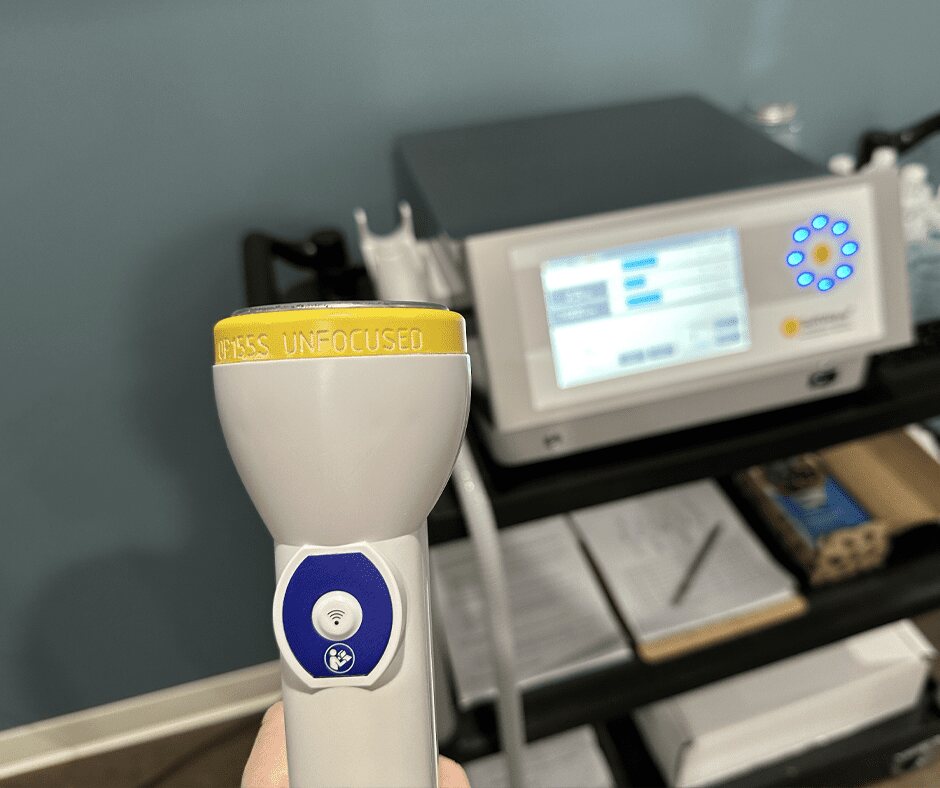
SoftWave Therapy uses electrohydraulic technology to generate broad-focused acoustic waves through a patented parabolic reflector. Unlike some other shockwave devices that only treat a small, shallow area, SoftWave's broad-focused wave is designed to reach deeper into tissue, which allows it to engage the body's healing processes more thoroughly. For older adults whose tissue may need extra encouragement to repair itself, this deeper reach can make a meaningful difference.
In plain language, here is what SoftWave is designed to do inside the body:
- Wake up resident stem cells: the treatment is designed to activate and help mobilize the body's own repair cells toward the area that needs help
- Encourage new blood vessel formation (angiogenesis): improved local blood flow can support the delivery of oxygen and nutrients to tissue that has been struggling to keep up with repair
- Support collagen production and cell growth: healthy collagen is part of what keeps joints, tendons, and connective tissue resilient
- Help modulate inflammation: rather than simply masking discomfort, the goal is to help the body regulate its own inflammatory response
Because the treatment works with your body's existing healing systems rather than introducing medication or cutting into tissue, it is often an appealing option for patients who are managing multiple health conditions, taking several medications already, or who simply want to avoid the risks that can come with surgery later in life.
What a Session Looks Like
SoftWave sessions are quick and straightforward, typically lasting about 10 to 15 minutes. There are no needles, no incisions, and no downtime, so you can go about your day afterward. Most patients complete a series of sessions over roughly 6 to 8 weeks, and it is common for the body to continue healing and improving for weeks or even months after the final session, since the biological processes SoftWave triggers take time to fully unfold.
A Non-Invasive Option Worth Considering
For adults over 60, the idea of surgery can carry real weight, from anesthesia risk to a longer recovery, to time away from the routines and people you care about. Long-term reliance on anti-inflammatory medication or pain relievers can also raise concerns, particularly alongside other prescriptions. SoftWave Therapy offers a different path. It is FDA-cleared for the activation of connective tissue, for temporarily increasing local blood flow, and for the temporary relief of minor muscle and joint pain, and it is used in the treatment of chronic diabetic foot ulcers and acute second-degree burns as well. It has been studied at leading institutions and is used by clinicians who also work with professional and collegiate athletes, which speaks to the seriousness with which the technology is regarded, even though every patient's needs and results are individual.
It is important to be clear that SoftWave Therapy is not a guaranteed cure, and it does not replace the medical advice of your physician. What it offers is a drug-free, non-surgical option that many patients report helps them feel more comfortable and more able to stay active in the things they love, whether that is a morning walk, tending a garden, or getting down on the floor with a grandchild without dreading getting back up.
If stiffness or joint discomfort has started to hold you back, it may be worth learning whether SoftWave Therapy is a good fit for you. You can request a new patient visit with Health Edge Sports & Spine to talk through your specific goals and history with Dr. Armen and the team.
What to Expect When You Visit
Every plan at Health Edge Sports & Spine starts with a conversation. Dr. Armen Manoucherian and the team will talk with you about your activity goals, your health history, and where you are feeling stiffness or pain, then discuss whether SoftWave Therapy makes sense as part of your care. Many patients appreciate that the process does not require stopping activities altogether while they heal, since SoftWave is designed to support the body rather than sideline it.
Staying active after 60 is not about pushing through pain or ignoring what your body is telling you. It is about giving your body real support so you can keep doing the things that matter to you, on your own terms, for years to come.
Ready to Take the Next Step?
You do not have to accept stiff joints and slower recovery as the price of staying active. A conversation with Dr. Armen and the team can help you understand your options and get back to the walks, gardening, and grandkids you love.
Request your SoftWave Therapy new patient visit online today
Contact Health Edge Sports & Spine
Health Edge Sports & Spine
2600 Foothill Blvd, Suite 203
La Crescenta, CA 91214
Phone: (818) 724-4352
Our Main Office Website: https://healthedgela.com/
‹ Back