

Blog
Weekend Warriors: Recovering From Overuse Injuries Without Downtime
Why Does That Nagging Ache Never Seem to Fully Heal in Glendale?
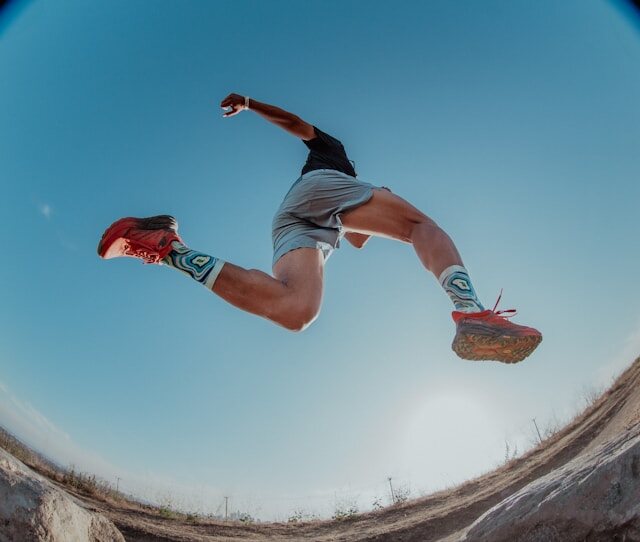
You hit the trails in the foothills on Saturday, squeeze in a tennis match or a long ride on Sunday, then show up to work Monday with a stiff elbow, a cranky knee, or a heel that barks with the first few steps out of bed. If you train hard on the weekends and push through a full week at a desk or on your feet in between, you already know that overuse injuries are a different animal than a sudden sprain. They do not announce themselves with one dramatic moment. They creep in, linger, and quietly limit what you can do, week after week.
Health Edge Sports & Spine, serving Glendale and the surrounding La Crescenta area, sees this pattern constantly in weekend warriors. Dr. Armen Manoucherian and the team work with active adults who refuse to sit still, and they understand that telling a driven person to simply "rest for six weeks" is often unrealistic and, frankly, not the only path forward. That is why the practice offers SoftWave Tissue Regeneration Technology (TRT), a non-invasive treatment designed to support the body's own repair process in overworked tendons, joints, and connective tissue, often without the extended downtime that traditional rest-and-wait approaches require.
The Usual Suspects: Overuse Injuries That Keep Weekend Athletes Sidelined
Repetitive strain injuries share a common thread: small amounts of stress, repeated over and over, that outpace the tissue's ability to repair itself between sessions. Some of the most common patterns Health Edge sees include:
- Tendinopathy in the Achilles, patellar, or rotator cuff tendons, from repetitive loading without adequate recovery time.
- Runner's knee (patellofemoral pain), often tied to mileage that ramps up faster than the surrounding muscles and tissue can adapt.
- Tennis elbow and golfer's elbow, caused by repeated gripping and swinging motions that irritate the tendons at the elbow.
- Plantar fasciitis and other plantar issues, which flare with every step and can be especially stubborn once inflamed.
- Shin splints and calf strain, common in runners and pickup basketball players who increase intensity too quickly.
What makes these injuries so frustrating is that they rarely resolve on their own timeline that fits a busy schedule. Tendons and connective tissue have a naturally slower blood supply compared to muscle, which means healing tends to lag behind the enthusiasm to get back out there.
Why These Injuries Linger Instead of Resolving
Overuse injuries stall for a few predictable reasons. First, the weekend-warrior pattern itself works against recovery: intense activity on Saturday and Sunday followed by five days of sitting, standing, or otherwise not moving the tissue through a full range of motion can leave partially healed tissue re-irritated before it ever fully settles down. Second, tendon and fascia tissue simply have less blood flow than muscle, so the raw materials needed for repair arrive more slowly. Third, many people keep training through mild discomfort because it "isn't that bad," which can turn a minor irritation into a chronic, low-grade injury that flares for months.
Rest alone can help, but for someone who values staying active, weeks or months of reduced training is not always an appealing answer, and it does not always resolve the underlying tissue changes anyway. This is where many patients look for options that work with an active lifestyle rather than against it.
How SoftWave Helps Overuse Injuries Heal
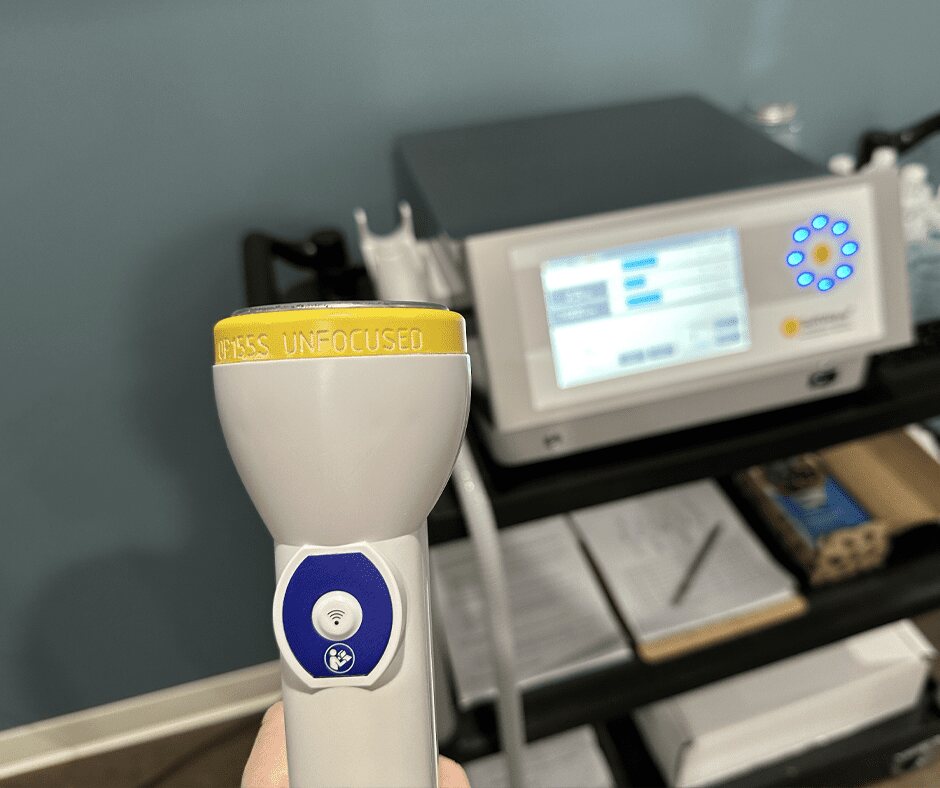
SoftWave TRT uses electrohydraulic, spark-generated acoustic waves delivered through a patented parabolic reflector. This is what is known as broad-focused shockwave therapy, which is different from the radial, electromagnetic, or piezoelectric devices used elsewhere. Broad-focused energy is designed to penetrate deeper into tissue, reaching the areas where chronic overuse injuries often live, such as deep tendon attachments and fascia.
In plain terms, here is what the technology is designed to do inside the body:
- Activate resident stem cells and encourage them to migrate to the area that needs repair.
- Stimulate angiogenesis, meaning the formation of new blood vessels, which can improve blood flow to tissue that is naturally slow to heal.
- Increase cell proliferation and collagen production, supporting the structural rebuilding of tendons and connective tissue.
- Help modulate inflammation, addressing the low-grade irritation that keeps an overuse injury from settling down.
Rather than simply masking discomfort, SoftWave is designed to trigger the body's own healing cascade at the site of the problem. That approach is part of why the FDA has cleared SoftWave for activation of connective tissue, temporary increase in local blood flow, and temporary relief of minor muscle and joint pain, in addition to more specialized uses such as chronic diabetic foot ulcers and acute second-degree burns.
What to Expect: No Needles, No Surgery, No Long Layoff
One of the biggest draws for busy, active patients is how the treatment fits into a real schedule. Sessions are non-invasive, involve no needles, no drugs, and no surgery, and typically run about 10 to 15 minutes. Most patients complete a series of sessions over roughly 6 to 8 weeks, and it is common for the body to continue responding and remodeling tissue for weeks to months after the final session. There is no incision to protect and no cast to work around, so many patients continue modified activity throughout the process rather than shutting training down completely.
SoftWave has been studied at leading institutions and is used by clinicians who work with professional and collegiate athletes, which reflects a broader interest in treatment options that support tissue healing without pulling people away from the activities they care about. As with any treatment, results vary from person to person, and SoftWave is not a guaranteed cure or a replacement for a full evaluation with your doctor. It is one tool among several that Dr. Armen and the team use to build a plan around your specific injury and goals.
If you have been icing the same elbow or taping the same arch for months with no real change, it may be time for a different conversation about what is actually happening in that tissue and what options exist beyond simply waiting it out. Reach out to schedule a visit and find out whether SoftWave TRT fits your recovery plan.
Building a Smarter Comeback, Not Just a Faster One
The goal is not to rush back into the same pattern that caused the irritation in the first place. Dr. Armen Manoucherian and the Health Edge team typically pair SoftWave sessions with guidance on training load, form, footwear, and recovery habits, so the underlying cause gets addressed alongside the tissue itself. For a weekend warrior, that combination matters: treating the tendon or fascia is one part of the picture, and adjusting how you train during the week is often the other.
Many patients describe the appeal of SoftWave as being able to stay engaged in their sport or routine while the tissue does its work in the background, rather than feeling like recovery and training are two separate, competing tracks. Whether the issue is a stubborn Achilles, a knee that complains on every downhill mile, or an elbow that flares every time you pick up a racket, an accurate diagnosis is the first step toward a plan that respects both your tissue and your schedule.
Ready to Take the Next Step?
Overuse injuries do not have to mean choosing between your training and your recovery. Let Dr. Armen and the team build a plan designed to get your tendons, joints, and connective tissue back on track.
Request your SoftWave Therapy new patient visit online today
Contact Health Edge Sports & Spine
Health Edge Sports & Spine
2600 Foothill Blvd, Suite 203
La Crescenta, CA 91214
Phone: (818) 724-4352
Our Main Office Website: https://healthedgela.com/
‹ Back